
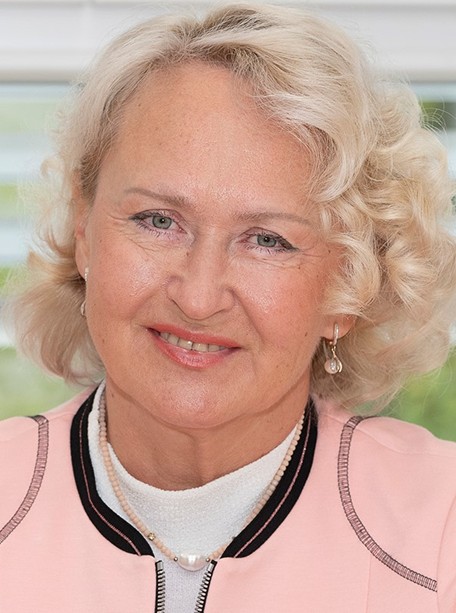
Olga Golubnitschaja (Germany)
16 MAY
18:00-19:00
OPENING LECTURE
The paradigm shift from reactive to Predictive, Preventive and Personalised Medicine: Beneficiaries and the road-map for a successful implementation
Olga Golubnitschaja (Germany)
Prof. Dr. Golubnitschaja is the head of the world first Predictive, Preventive Personalised Medicine (3PM) unit at the Department of Radiation Oncology, University Hospital Bonn, Rheinische Friedrich-Wilhelms-Universität Bonn, Germany. Prof. Dr. Golubnitschaja is the highestly ranked medical researcher in Personalised medicine worldwide: https:// www.epmanet.eu/latest/news/2025/president-of-the-epma-brussels-introduces-the-host-of-the-epma- orldcongress- 2025 Dr. Golubnitschaja is the author of more than 400 internationally peer-reviewed publications (research and review articles, position papers, books, book and congress contributions) in the innovative field of predictive, preventive and personalised medicine (3PM). Awards: National & International Fellowship of the Alexander von Humboldt-Foundation; Highest Prize in Medicine and Eiselsberg-Prize in Austria. In years 2009 – 2021 Dr. Golubnitschaja was the Secretary-General and since September 2021 she is the President of the “European Association for Predictive, Preventive & Personalised Medicine” (EPMA, Brussels) networking 57 countries worldwide, www.epmanet.eu. She is Editor-in-Chief of the EPMA J. and Editor-in-Chief of the Book Series “Advances in Predictive, Preventive & Personalised Medicine”. Dr. Golubnitschaja is the European Representative in the EDR-Network at the National Institutes of Health USA, http://edrn.nci.nih.gov/. Dr. Golubnitschaja acts as a regular reviewer in over 50 clinical and scientific journals and as a grant reviewer of inter/national funding bodies in European and other countries. Dr. Golubnitschaja is an evaluation expert at the European Commission. In years 2010-2013 she was involved in creating the PPPM related contents of the European Programme “Horizon 2020”. Dr. Golubnitschaja as the Vice-Chair of the Habilitation Committee in years 2019-2023 was responsible for all medical specialisations at the Medical Faculty, University of Bonn, Germany.
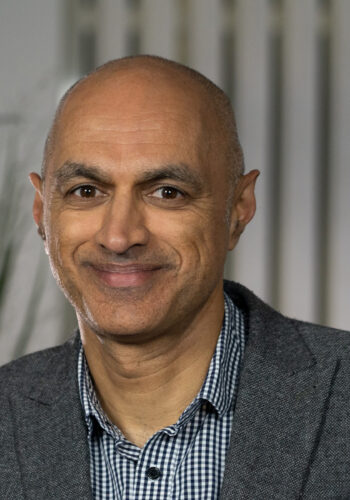
Naveed Sattar (UK)
17 MAY
11:30-12:30
PLENARY 1
Obesity medicines now prime time: implications for laboratory medicine?
Naveed Sattar (UK)
Naveed Sattar is a Glasgow Graduate, but brought up in modest Lanarkshire ! He is clinically active, and has helped advance understanding and management of diabetes, cardiovascular disease, and obesity. His current research increasingly focuses on intentional weight loss interventions – esp. incretins – and on clarifying how obesity contributes to the development or progression of multiple adverse health outcomes, including diabetes, cardiovascular conditions, and autoimmune diseases such as psoriasis and psoriatic arthritis. He has received numerous prestigious national and international awards recognising his scientific contributions and has over 1600 published papers. He has also contributed to multiple national and international clinical guidelines, including on the cardiometabolic consequences of autoimmune disease. He serves as an Associate Editor for Diabetes Care and Editorial Consultant for The Lancet. He contributes to new health initiatives in the Scottish Health Service and is currently Chair of the Obesity Healthcare Goals programme for the UK government.
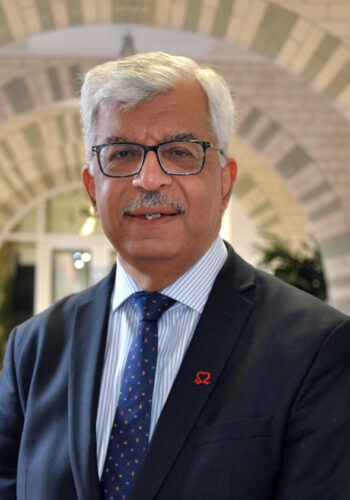
Munir Pirmohamed (UK)
18 MAY
11:30-12:30
PLENARY 2
Embedding Pharmacogenomics in the NHS: Implications for Clinical Pathways and Laboratory Medicine
Munir Pirmohamed (UK)
Prof Sir Munir Pirmohamed (MB ChB, PhD, FRCPE, FRCP, FFPM. FRSB, FBPhS, FMedSci ) is currently David Weatherall Chair of Medicine at the University of Liverpool, and a Consultant Physician at the Royal Liverpool University Hospital. He also holds the only NHS Chair of Pharmacogenetics in the UK. He is Director of the Centre for Drug Safety Sciences, and Director of the Wolfson Centre for Personalised Medicine. He also leads the Centre for Excellence in Regulatory Science and Innovation in Pharmacogenomics (CERSI-PGx). He was awarded a Knights Bachelor in the Queen’s Birthday Honours list in 2015. He is an inaugural NIHR Senior Investigator, and Fellow of the Academy of Medical Sciences in the UK. He is Chair of the Commission on Human Medicines. He is also a Medical Trustee for the British Heart Foundation. Past appointments include President of the British Pharmacological Society, President of the Association of Physicians, Member of the Governing Council of the MRC and Non-Executive Director NHS England.
His research focuses on personalised medicine in order to optimise drug efficacy and minimise toxicity, move discoveries from the lab to the clinic, and from clinic to application.
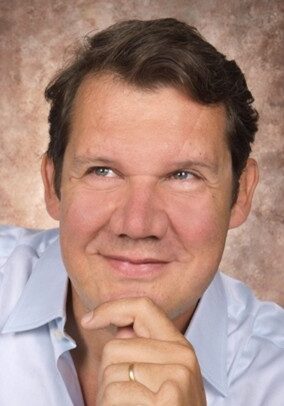
Stefano Piccolo (Italy)
19 MAY
11:30-12:30
PLENARY 3
Redefining cancer biology in the era of artificial Intelligence
Stefano Piccolo (Italy)
Stefano Piccolo is Professor of Molecular Biology at the University of Padua School of Medicine and a member of EMBO, the Accademia dei Lincei (Italian National Academy), and the Pontifical Academy of Sciences. In recognition of his pathfinding contributions to cancer research, he has received numerous national and international honors, including the AIRC–Venosta Award, the Chiara D’Onofrio Award, the SwissBridge Award, and the Debiopharm Award, and he has been invited to deliver the Choh Hao Li Memorial Lecture at UC Berkeley. He is a two-time Advanced ERC grantee and has been listed as a Clarivate Highly Cited Researcher since 2020, placing him among the top 1% of most cited scientists worldwide. His work has opened new research directions in signaling, cancer biology, and tissue regeneration. His central contribution lies in elucidating how cells perceive mechanical cues and how form, in living tissues, governs function — establishing a conceptual framework in which tissue architecture is itself an instructive principle of biology. In keeping with this perspective, his current interests focus on how disturbed architecture of form — the corruption of tissue geometry, mechanics, and spatial organization — instructs disease, from the earliest steps of malignant transformation to metastatic progression and therapy resistance. This vision is now being translated into the domain of digital pathology, where his group combines high-content imaging, single cell spatial transcriptomics, AI-driven morphometric analysis, and mechanistic modeling to read the latent biological information encoded in tissue composition and shape. This allows the construction of predictive digital holograms of living ecosystems, offering quantitative, mechanistic, and clinically actionable readouts, with the long-term ambition of redefining diagnosis, prognosis, and treatment stratification in oncology and regenerative medicine.
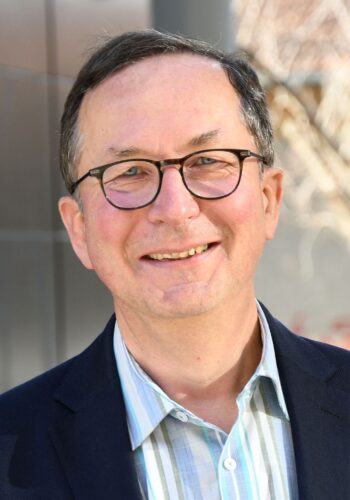
Florian Kronenberg (Austria)
20 MAY
11:30-12:30
PLENARY 4
Lipoprotein(a) – From Guidelines to Implementation
Florian Kronenberg (Austria)
Professor Florian Kronenberg is a distinguished medical professional specializing in genetic and clinical epidemiology, with a particular focus on lipoprotein(a). He received his MD from the University of Innsbruck, Austria, and trained in Medical Genetics under Gerd Utermann. His career includes significant research roles at the University of Utah and the Helmholtz Center Munich. Since 2004, he has been a full professor and head of the Institute of Genetic Epidemiology at the Medical University of Innsbruck. He is a Member of the Academia Europaea and the current president of the Austrian Atherosclerosis Society. Professor Kronenberg’s research interests encompass genetic and clinical epidemiological studies on lipoprotein(a) and the genetics of complex diseases such as atherosclerosis, lipid disorders, kidney diseases, and diabetes mellitus. He is Deputy Editor-in-Chief of “Atherosclerosis” and has served as a workgroup member on several guideline and consensus initiatives in the fields of kidney disease and lipid metabolism. He chaired the most recent EAS Consensus Statement on Lp(a) (together with Samia Mora and Erik Stroes) and is chair of the Lp(a) International Task Force. He has published about 575 papers, including more than 460 original papers and over 100 review articles, editorials, and book chapters. His work has garnered around 75,000 citations, with an H-index of 133 on Google Scholar.